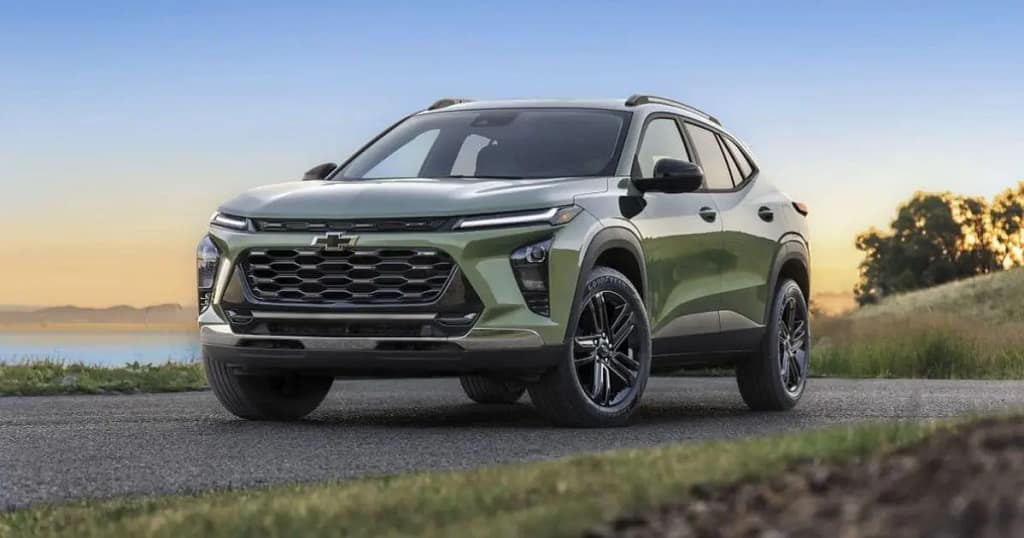

Overview
The 2026 Hyundai Kona looks modern, feels bigger than before and now comes with more standard tech than most small SUVs. Big screens, adaptive cruise control on every trim, and an available turbo engine making it one of the most feature-packed options in its class.
But there’s a catch: prices are climbing, and higher trims start overlapping with larger SUVs like the Tucson. So the real question isn’t just “Is the 2026 Kona good?” — it’s “Is it still worth the money?”
In this review, we break down trims, engines, fuel economy, space, tech, pros and cons, and how the Kona compares to rivals like the HR-V, Kicks, Corolla Cross, CX-30, and Crosstrek.
What’s New for 2026
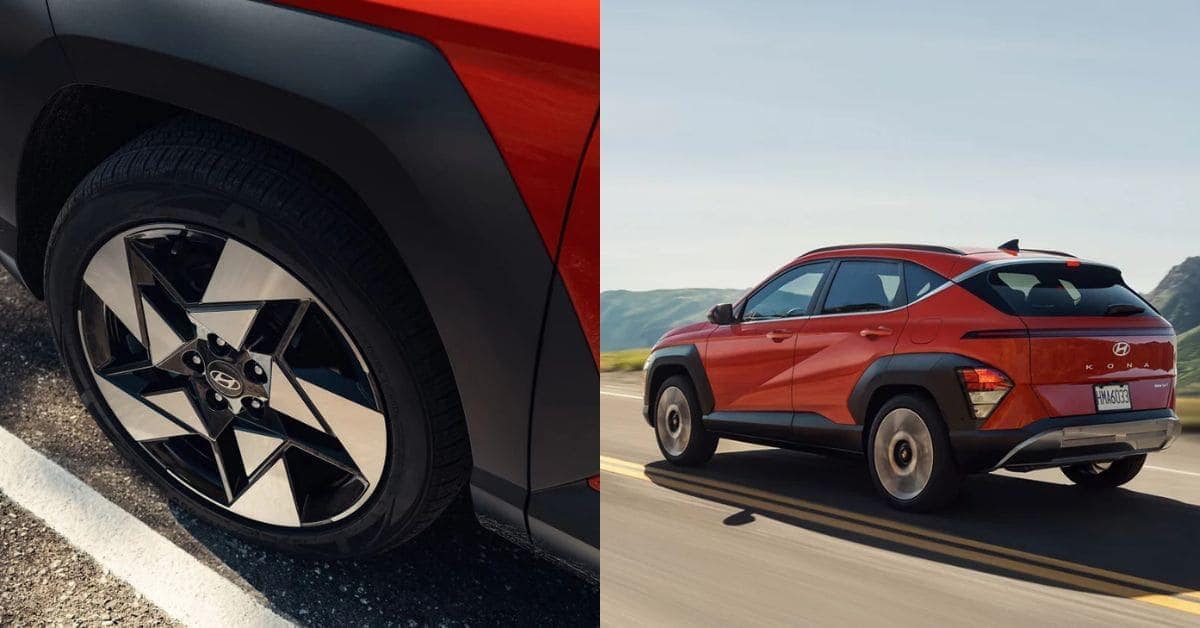
The 2026 Hyundai Kona is an update year, not a full redesign. It keeps the newer shape and larger cargo area. Although, Hyundai changed the trim lineup, removing some trims and adding SEL Sport and SEL Premium.
Prices went up slightly. There are small style changes, like more black or gray exterior trim instead of body color. Most of the Kona stays the same, with light updates to keep it competitive.
Trims and Prices
| Trim (Engine) | Est. Price |
|---|---|
| SE (2.0L non-turbo) | $27,100 |
| SEL Sport (2.0L non-turbo) | $28,275 |
| SEL Premium (1.6L turbo) | $30,025 |
| Limited (1.6L turbo) | $35,135 |
All-wheel drive costs about $1,500 more.
Which Trim Makes the Most Sense
SE is the cheapest, but it has fewer comfort features and the weaker engine. It works best for tight budgets.
SE Sport adds some style and small upgrades without a big price jump.
SEL Premium is the best balance. It’s the lowest trim with the turbo engine, bigger screens, wireless charging, leatherette seats, and heated front seats. It gives good power and features for the money.
Limited is fully loaded but expensive for this size. It mainly makes sense if you want ventilated seats, surround-view camera, or smart parking.
Engines and Performance
The 2026 Hyundai Kona offers two gas engines, based on trim.
Lower trims use a 2.0L engine with 147 hp. It uses a CVT-style automatic and is built for smooth, fuel-saving driving. In this class, base engines usually struggle during highway merges and quick passes. The Kona’s 2.0L engine follows that pattern — it works for city driving, but drivers who spend a lot of time on highways will notice the lack of power.
Higher trims get a 1.6L turbo engine with 190 hp and an 8-speed automatic. It’s much quicker and better for passing and highway driving.
The turbo engine changes the Kona’s personality. Compared to most small SUVs, it gives quicker acceleration and makes passing easier, which matters more in real traffic.
Front-wheel drive is standard and all-wheel drive is optional on most trims.
Fuel Economy
Fuel economy on the 2026 Hyundai Kona depends on the engine and drivetrain. According to EPA estimates, mileage breaks down like this:
- 2.0L engine, FWD: about 29–30 city / 34–35 highway
- 2.0L engine, AWD: about 27 city / 29 highway
- 1.6L turbo, FWD: about 26 city / 32 highway
- 1.6L turbo, AWD: about 24–25 city / 28–29 highway
Combined mileage ranges from about 26 to 31 mpg. Base FWD models save the most fuel. Turbo and AWD models use more gas.
Interior and Space
Front Seats
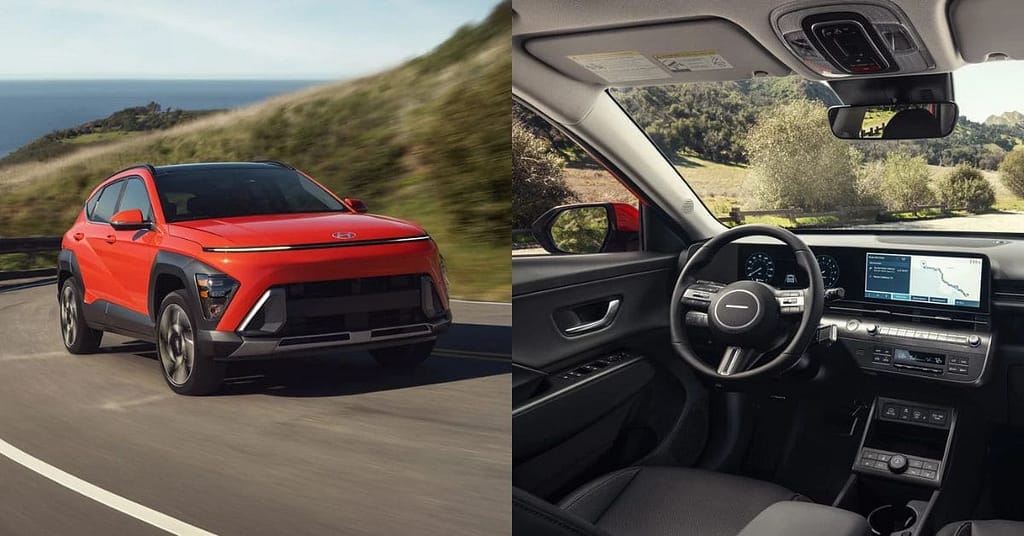
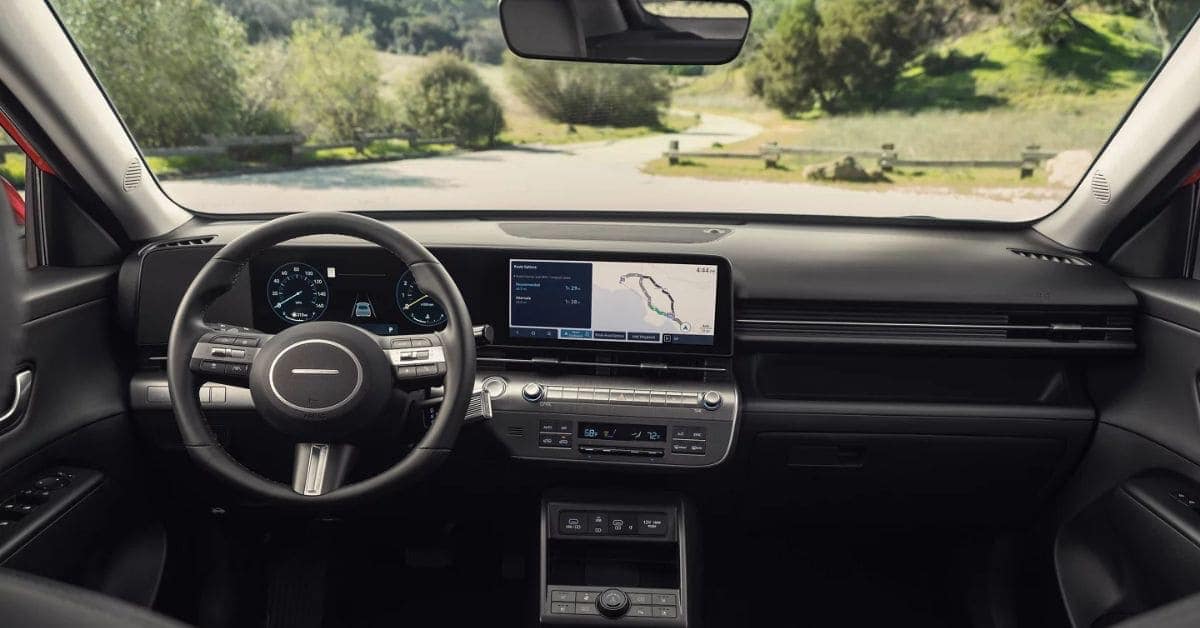
All 2026 Hyundai Kona trims use dual digital screens, and wireless Apple CarPlay and Android Auto come standard. Climate and media controls use real buttons, which makes everyday use easier than in fully touch-based cabins. Trim-level differences look like this –
Lower trims (SE, SEL Sport): cloth or basic upholstery, manual or basic power adjustment, no heating or ventilation
Mid trim (SEL Premium): leatherette seats, heated front seats, wireless phone charging, and upgraded interior trim
Top trim (Limited): leatherette seats with ventilation, premium audio system, ambient lighting, and the most interior tech features
Some models use a column-mounted shifter, which frees up more space in the center console for storage. Even in the Limited trim, some hard plastic remains, showing that the focus is more on space and easy use than on luxury materials.
Rear Seat
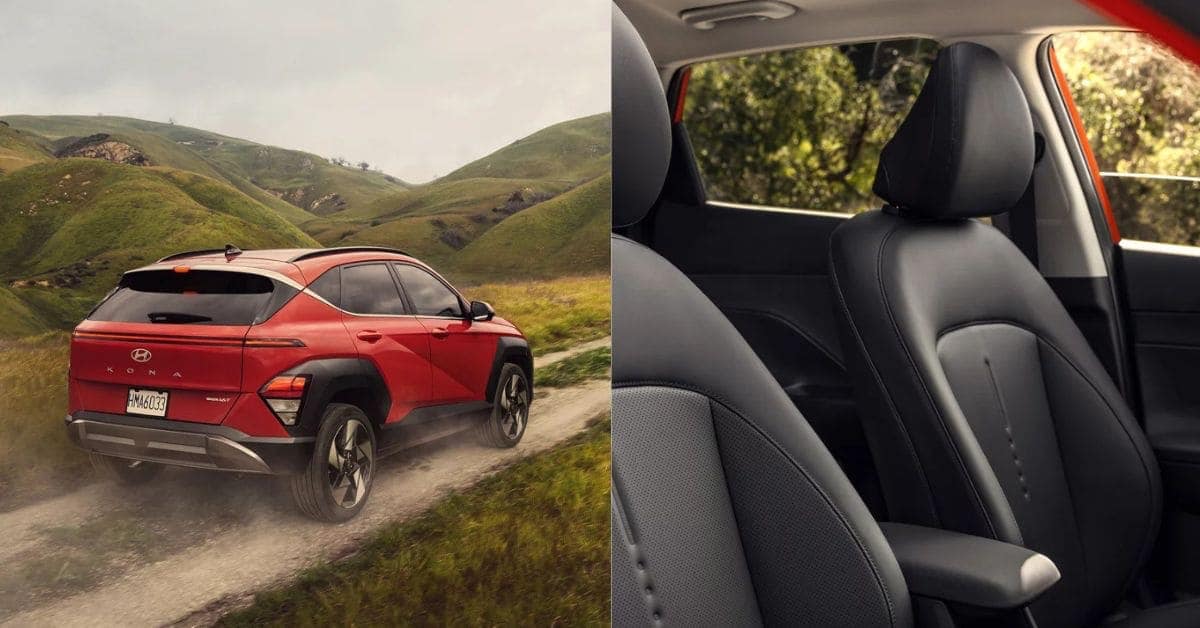
Rear legroom is about 38 inches, which is strong for a subcompact SUV and enough for most adults to ride comfortably on short and medium trips. Two adults fit easily, while three across is best for shorter drives.
Rear-seat features by trim:
SE and SEL Sport: basic rear bench, no rear air vents, limited rear charging options
SEL Premium: adds USB-C charging ports and upgraded rear trim
Limited: adds rear air vents, USB-C ports, and a fold-down center armrest
While it’s not as spacious as a compact SUV, the Kona’s rear seat works well for small families, daily commuting, and carrying adult passengers without feeling cramped.
Cargo
Cargo space measures about 25.5 cubic feet behind the rear seats and up to 63.7 cubic feet with them folded, which is near the top of the subcompact SUV class.
Cargo features by trim:
SE and SEL Sport: single-level cargo floor with basic storage layout
SEL Premium: adds a dual-level cargo floor for better organization
Limited: also includes the dual-level cargo floor, plus more trim and finishing around the cargo area
Across all trims, the wide and low cargo opening makes it easier to load groceries, strollers, or small furniture compared to taller, boxier rivals.
Safety & Driver-Assistance Features
All 2026 Hyundai Kona models come with Hyundai SmartSense safety tech. Adaptive cruise control is now standard on every trim.
Standard safety features include automatic emergency braking, forward collision warning, lane-keep and lane-centering assist, blind-spot monitoring, rear cross-traffic alert, driver attention warning, auto high beams, and safe exit warning.
Higher trims add blind-spot view camera, surround-view camera, highway driving assist, and smart parking.
The Kona has strong safety scores, including IIHS Top Safety Pick+ and up to a 5-star NHTSA rating.
Pros and Cons
Pros
- Good value with lots of features for the price
- Strong standard safety tech, including adaptive cruise control
- Turbo engine is quick for this class
- Large infotainment screen comes standard
- Roomy rear seat and cargo area for a small SUV
- Bold, distinctive styling
- Long warranty coverage
Cons
- Base engine feels slow
- Fuel economy drops with turbo and AWD
- Top trims get expensive for a subcompact SUV
- Interior still uses some hard plastic
- No towing capability and no hybrid option
Key Limitations & Trade-Offs
Specifcations
| Item | Details |
|---|---|
| Engine | 1.6L turbo 4-cylinder |
| Power | 190 hp |
| Torque | 195 lb-ft |
| Transmission | 8-speed automatic |
| Drivetrain | All-wheel drive |
| Fuel Economy | 25 city / 28 hwy / 26 comb |
| Curb Weight | ~3,505 lbs |
| Length | 171.3 inches |
| Width | 71.9 inches |
| Height | 63.4–63.6 inches |
| Fuel Tank | 13.2 gallons |
| Towing | Not rated |
Key Specs Across the Lineup
| Feature | Details |
|---|---|
| Seating | 5 passengers |
| Engines | 2.0L non-turbo (147 hp) / 1.6L turbo (190 hp) |
| Transmissions | CVT-style (base) / 8-speed auto (turbo) |
| Drivetrain | FWD or AWD |
| Fuel Economy | About 26–31 mpg combined |
| Cargo Space | 25.5 cu ft / 63.7 cu ft folded |
| Screen | 12.3-inch touchscreen standard |
Ownership Costs and Long-Term Use
The Kona’s long warranty is one of its biggest advantages. Hyundai offers 5 years/60,000 miles of basic coverage and 10 years/100,000 miles on the powertrain, which is longer than most rivals.
Insurance costs are usually average for a small SUV, though turbo and AWD models can cost more to insure. Maintenance is similar to other non-luxury crossovers, with basic services like oil changes and brakes staying affordable.
Buyers who plan to keep the Kona long-term may prefer the non-turbo engine, since naturally aspirated engines often have fewer long-term concerns than small turbo engines.
Segment Comparison
In the subcompact SUV class, the 2026 Hyundai Kona stands out for its tech, features, and available turbo engine. Even lower trims come well equipped.
Vs Toyota Corolla Cross: Kona is quicker with the turbo and has more standard tech. Corolla Cross focuses more on reliability.
Vs Nissan Kicks: Kona offers more power choices and AWD. Kicks is cheaper at the base level.
Vs Honda HR-V: Kona has stronger engine options and more driver aids. HR-V focuses on simple design and space.
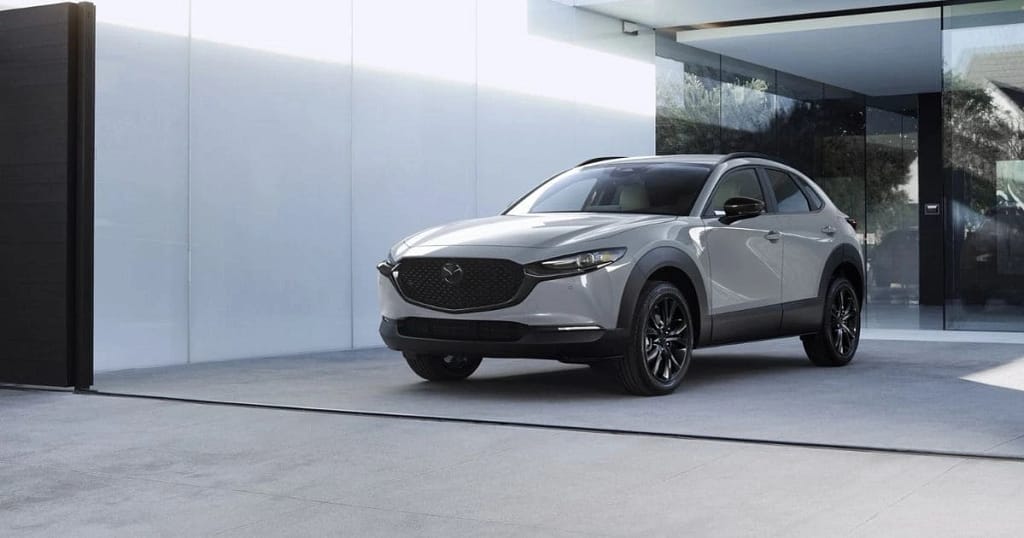
Vs Mazda CX-30: CX-30 is sportier to drive. Kona has more tech and safety features.
Vs Subaru Crosstrek: Kona feels more modern inside. Crosstrek has a tougher, outdoor style.
Overall, the Kona is the tech-heavy, feature-rich choice. It trades some fuel economy and interior luxury for big screens, safety tech, and bold style.
Who Should Buy
The 2026 Hyundai Kona is a good pick if you want a small SUV with modern features and strong safety tech.
You should consider it if you:
- Want lots of safety features, even on lower trims
- Like big screens and simple, modern interiors
- Need good cargo space in a small SUV
- Want a quicker option with the turbo engine
- Care about long warranty coverage
- Drive mostly in the city or suburbs
The Limited trim is best for buyers who want the bold look, large screens, and the most safety features in a compact SUV.
Who Might Skip
The 2026 Hyundai Kona may not be right for you if you:
- Want the lowest price in the class
- Want a hybrid or best-in-class fuel economy
- Need more space than a subcompact SUV offers
- Want sporty handling
- Need towing ability
- Don’t care about tech or safety features
- Prefer simple, traditional styling
- Want luxury-level interior materials
Verdict: Is the 2026 Hyundai Kona Worth Buying?
The 2026 Hyundai Kona is one of the most tech-heavy small SUVs you can buy. Even lower trims feel modern, thanks to big screens and strong safety features, and the turbo engine makes it quicker than most rivals.
That said, it’s no longer the budget-friendly option it once was. Higher trims get expensive fast and start to overlap with larger SUVs that offer more space. The base engine is also slow if you drive a lot on highways.
If you want modern tech, strong safety features, and a small SUV that feels fresh, the Kona is a smart pick — especially in SEL Premium trim. But if price, fuel economy, or driving fun matter more, some rivals may suit you better.34,135

I’m Brandon Coldwell, and I write about the latest car launches, EVs, and trends shaping the automotive world. I’ve always loved cars — the design, the tech, and the excitement of new releases — and now I enjoy turning updates into clear, helpful posts.