
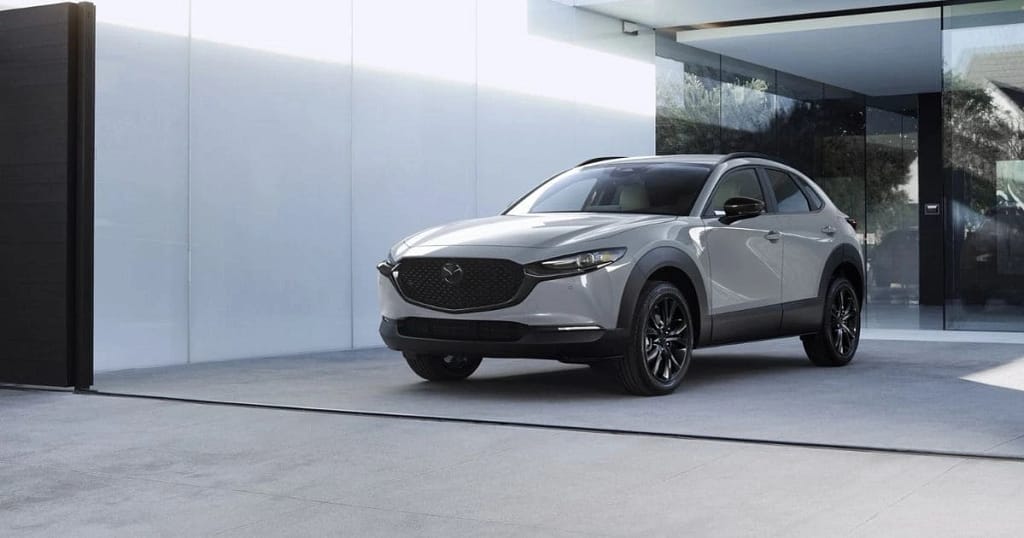
The 2026 Mazda CX-30 does things a bit differently from most subcompact SUVs. Instead of chasing the biggest cargo area or a tough, outdoorsy look, it leans toward clean design, nicer materials and a more engaging setup on the road. Its emphasis on interior quality places it toward the more premium end of the segment, though rear-seat space and cargo capacity are more limited than some rivals.
What’s New
For 2026, the CX-30 doesn’t change much overall. The big update is the addition of two new Aire Edition trims—one with the standard engine and another with the turbo. These versions sit above the Preferred trim and mainly focus on styling and interior details, including white leatherette seats, gray suede accents, black exterior badging and black 18-inch wheels.
Mazda also adds a limited-slip differential for 2026, which is intended to improve traction and help the CX-30 make better use of its power, especially in situations where grip matters.
2026 Mazda CX-30 Trims and Prices
The 2026 Mazda CX-30 starts at $27,470 and tops out at $39,395, before destination fees. Pricing climbs steadily as you move up the trim ladder, mainly adding interior upgrades, styling changes, and access to the turbo engine on higher trims.
| Trim Level | Starting MSRP |
| Base | $27,470 |
| Select Sport | $29,155 |
| Preferred | $30,785 |
| Aire Edition | $31,345 |
| Carbon Edition | $32,525 |
| Premium | $34,735 |
| Turbo Aire Edition | $35,905 |
| Turbo Premium Plus | $39,395 |
No matter the trim, every CX-30 comes with all-wheel drive and a six-speed automatic transmission as standard.
Which Trim Makes the Most Sense
Engine and Performance
The 2026 Mazda CX-30 is offered with two gasoline engines:
- 2.5-liter naturally aspirated four-cylinder rated at 191 horsepower
- 2.5-liter turbocharged four-cylinder rated at 250 horsepower on premium fuel
Both engines are paired with a six-speed automatic transmission and all-wheel drive is standard.
Testing data published by Car and Driver shows 0–60 mph times of around 8.1 seconds for the standard engine and about 6.2 seconds for the turbocharged version. Within the subcompact SUV segment, those figures place the turbo CX-30 among the quicker options available.
Buyers interested in performance-oriented tuning may also cross-shop the related Mazda 3, which shares much of the CX-30’s mechanical foundation.
Fuel Economy
According to EPA estimates:
- Standard engine: 24 mpg city / 31 mpg highway / 27 mpg combined
- Turbo engine: 22 mpg city / 30 mpg highway / 25 mpg combined
Independent highway testing cited by Car and Driver recorded fuel economy results that aligned closely with EPA highway ratings.
For official figures and comparisons, buyers can refer to the Environmental Protection Agency (EPA) website.
Interior Overview
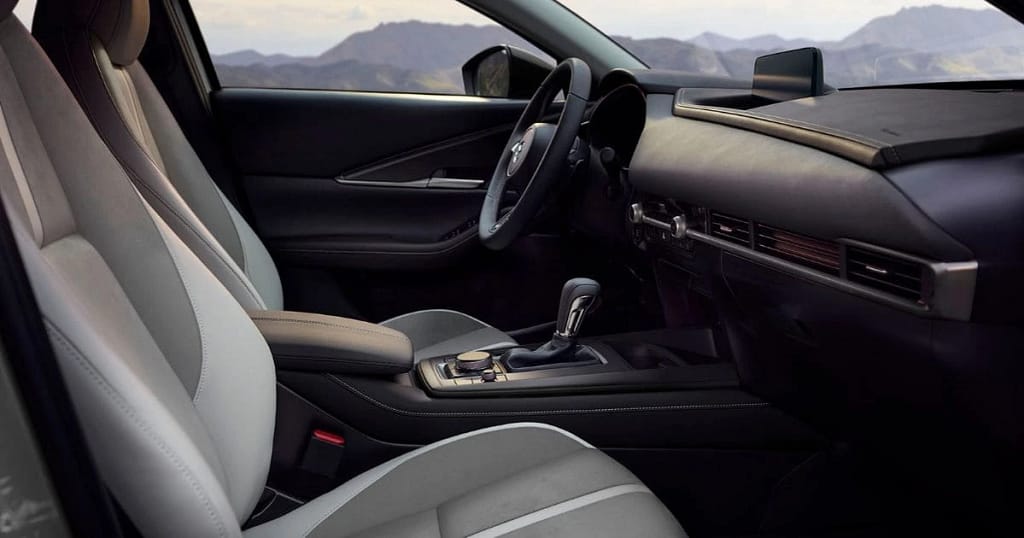
Interior quality is a defining strength of the CX-30. Materials, fit, and design are positioned above most mainstream subcompact SUVs. Higher trims add leather upholstery, upgraded trim finishes, and features typically associated with entry-level luxury models.
Passenger and Cargo Space
Front-seat space is competitive for the segment, but rear-seat room is limited. The sloping roofline reduces headroom, making the second row best suited for children or shorter trips.
As per the official website, Cargo space measures approximately 20 cubic feet behind the rear seats, expanding to around 45 cubic feet with the seats folded. This trails more upright competitors in the segment.
Infotainment and Technology
Standard technology includes:
- 8.8-inch infotainment display
- Wireless Apple CarPlay and Android Auto
- Bluetooth connectivity
- Mazda Connected Services
Upper trims add a larger display, built-in navigation, a head-up display, and a Bose premium audio system. Alexa Built-In is also available on most trims, supporting voice-based functions.
Safety & Driver-Assistance Features
The CX-30 includes a wide range of standard driver-assistance features:
- Automated emergency braking with pedestrian detection
- Lane-departure warning with lane-keeping assist
- Adaptive cruise control
Crash-test results and ratings are published by the National Highway Traffic Safety Administration (NHTSA) and the Insurance Institute for Highway Safety (IIHS).
Pros and Cons
| Pros | Cons |
|---|---|
| Premium interior materials | Tight rear-seat space |
| Standard all-wheel drive | Smaller cargo area than many rivals |
| Strong available turbocharged engine | Turbo trims are expensive |
| Extensive standard safety features | No Hybrid options |
Key Limitations & Trade-Offs
The CX-30’s design prioritizes style and driving engagement over space efficiency. Buyers trading up from larger crossovers may notice the limited rear-seat comfort and cargo capacity. Fuel economy is also average rather than class-leading.
How It Compares in Its Segment
Compared to boxier subcompact SUVs, the CX-30 focuses less on space and more on refinement, with greater attention to interior materials, driving balance, and available performance options.
Competitors
Hyundai Kona (Starts at $26k)
The Kona offers a more modern tech layout and, in some trims, better rear-seat and cargo space, along with available electrified options that the CX-30 does not offer.
Kia Seltos (Starts at $23k)
The Seltos prioritizes interior room and value, with a boxier shape that makes it more practical for passengers and cargo than the CX-30.
Chevrolet Trailblazer (Starts at $23k)
The Trailblazer leans more toward affordability and utility, offering competitive cargo space and lower starting prices, though with a more basic interior presentation.
Buick Encore GX (Starts at $25k)
The Encore GX emphasizes comfort and quietness, with a softer ride focus and more upright packaging that benefits rear-seat usability.
Who Should Skip
The CX-30 might not be the best fit for people who need the rear seats regularly. The sloped roofline reduces headroom, which limits comfort for back-seat passengers. Cargo space is also smaller than some boxier subcompact SUVs, so it may not work if you need maximum storage. Buyers focused mainly on low purchase price or top fuel efficiency might find better alternatives in this segment.
Who Should Buy
The CX-30 is a good pick if you care about interior quality and design. Its cabin uses materials and finishes that are generally better than most subcompact SUVs. All-wheel drive comes standard, which adds practicality for drivers in varied road or weather conditions. If you want a bit more power, the turbocharged engine is available on higher trims, giving stronger output without having to move up to a bigger SUV.

I’m Brandon Coldwell, and I write about the latest car launches, EVs, and trends shaping the automotive world. I’ve always loved cars — the design, the tech, and the excitement of new releases — and now I enjoy turning updates into clear, helpful posts.