
Overview
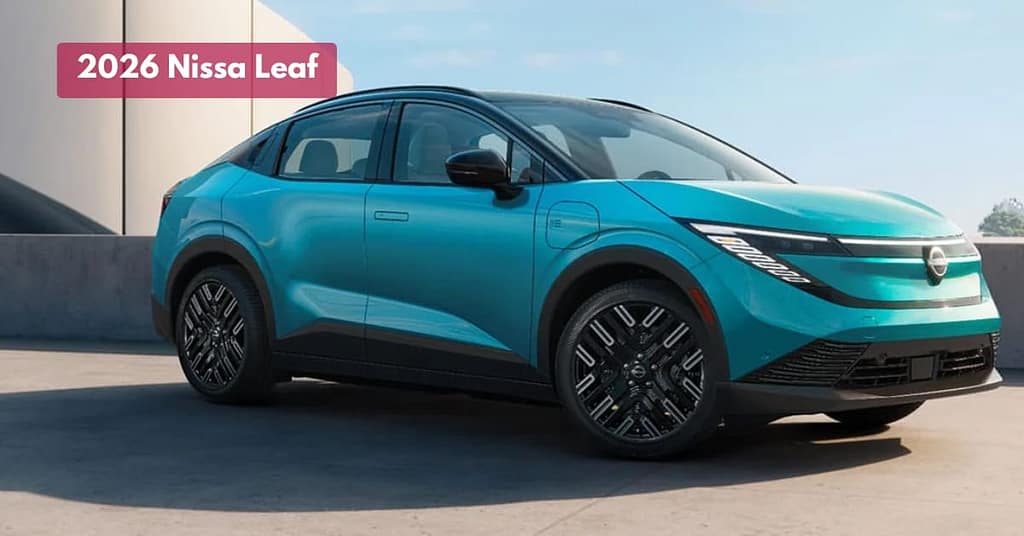
The Nissan Leaf returns for 2026 as a fully redesigned, third-generation electric car and a fresh start for the nameplate. First launched in 2010 as one of the earliest mass-market EVs in the U.S., the Leaf became known for affordability, but over time it fell behind newer rivals in range, design and technology.
For 2026, the Nissan Leaf drops its old hatchback look for a sleeker sportback design and adds better range, modern charging and a much nicer interior. It’s built for buyers who want a practical, affordable EV with up-to-date features—without paying luxury-brand prices.
What’s New for 2026
The 2026 Leaf is a full redesign and the biggest update the model has ever had. Nissan rebuilt it from the ground up to better match what today’s EV buyers expect.
Key changes include:
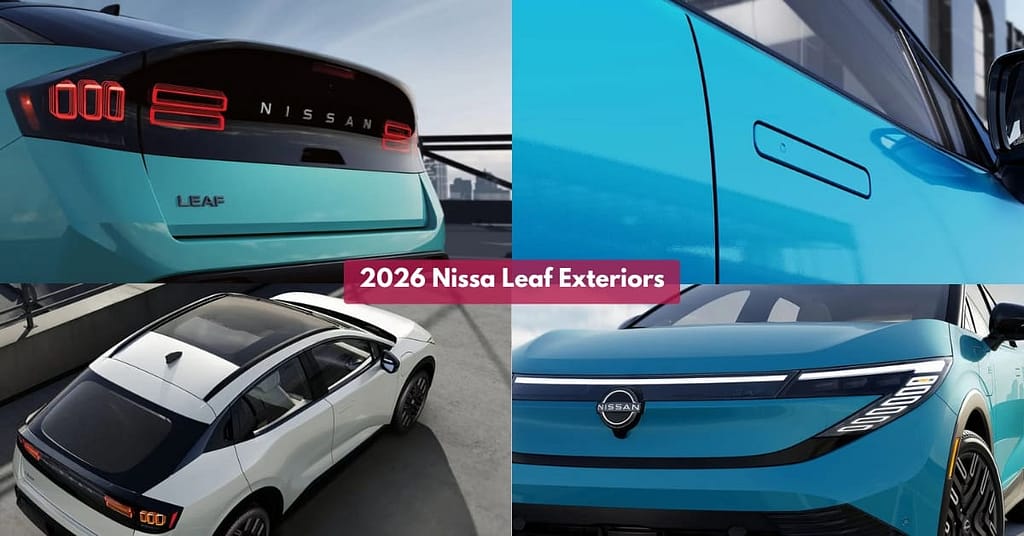
- A new sportback-style design, replacing the old hatchback look
- A dedicated EV platform (CMF-EV) shared with the Nissan Ariya
- A larger 75 kWh liquid-cooled battery, improving range and efficiency
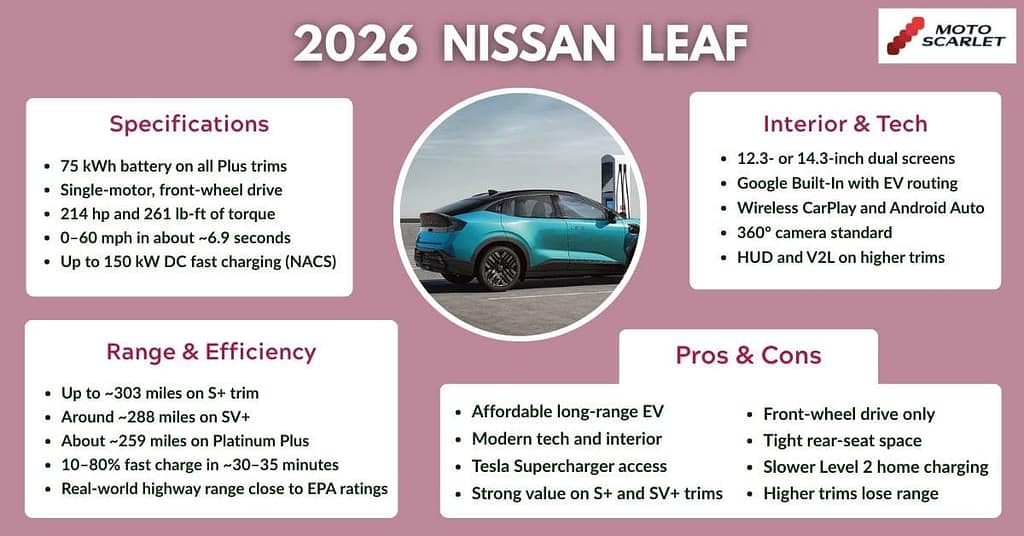
- EPA-estimated range of up to 303 miles, depending on trim
- Tesla NACS DC fast-charging port, replacing the old CHAdeMO setup
- Faster DC charging speeds, up to 150 kW
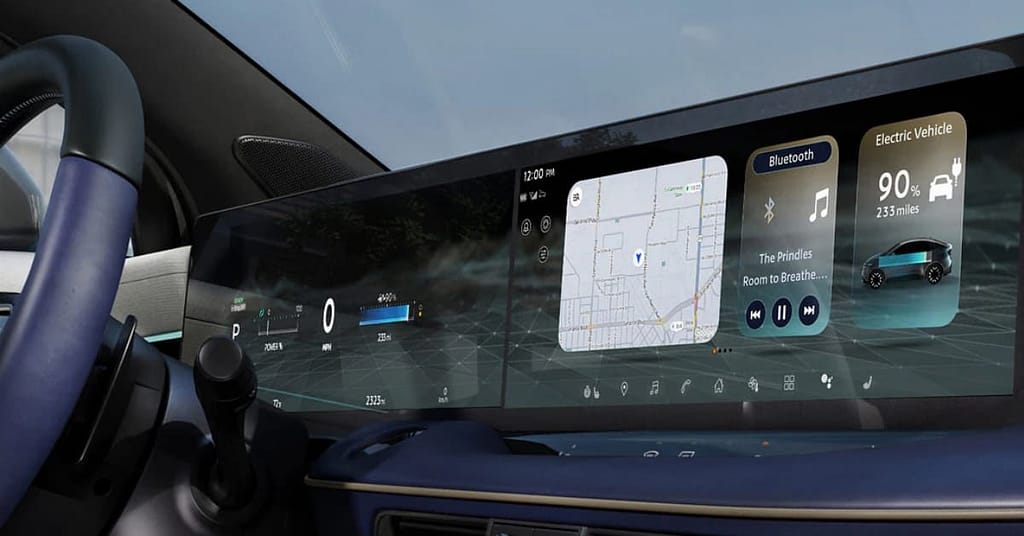
- A redesigned interior with larger digital displays and updated software
- Available vehicle-to-load (V2L) capability on higher trims
Even though it looks larger and more crossover-like, the 2026 Nissan Leaf is slightly shorter and lower than before.
Trims and Prices (Estimated)
| Trim | Starting Price |
| Nissan Leaf S | ~$26,000 |
| Leaf S+ | ~$29,990–$31,485 |
| Leaf SV+ | ~$34,200–$35,725 |
| Leaf Platinum | TBD |
| Leaf Platinum Plus | ~$38,990–$40,485 |
Prices vary depending on whether destination fees are included and before optional extras.
With destination charges and options like two-tone paint or a battery heater, a fully equipped Platinum Plus can approach $42,000. All currently available “Plus” trims share the same 75 kWh battery and front-wheel-drive layout, with differences mainly in range, interior features, and technology rather than performance.
Which Trim Makes the Most Sense
For overall value: SV+
SV+ hits the sweet spot for most. It adds the larger displays, upgraded audio system, rear air vents and a heat-pump HVAC system while keeping the price in check. Range stays solid at around 288 miles.
For features: Platinum Plus
Platinum Plus is for those who want the most equipment. It includes the panoramic dimmable glass roof, Bose audio, head-up display, power lift gate, and upgraded interior materials.
For the value: S+
S+ delivers the longest driving range in the lineup—up to 303 miles—by using smaller wheels and fewer features, while keeping the price lower.
For budget option: S
The base S trim is for buyers focused on the lowest entry price. It covers basic EV needs but skips many comfort and technology features.
Engine and Performance
Every trim now comes with a single electric motor and front-wheel drive, with no all-wheel-drive option offered.
Key specs (75 kWh models):
- Power: 214 horsepower
- Torque: 261 lb-ft
- Battery: 75 kWh liquid-cooled lithium-ion
- Transmission: Single-speed reduction gear
Third-party testing reported by Car and Driver places 0–60 mph at around 6.9 seconds, with a quarter-mile time near 15.4 seconds. It’s not really performance-focused by EV standards but it’s more than adequate for daily commuting, highway merging and city driving.
Range and Efficiency
Range is one of the biggest upgrades for the 2026 Nissan Leaf, and it now stacks up well against other affordable EVs.
EPA-estimated range by trim:
- S+: up to 303 miles
- SV+: about 288 miles
- Platinum Plus: about 259 miles
The drop in range on higher trims mainly comes from larger wheels and added equipment, not a smaller battery.
Charging details:
- DC fast charging: up to 150 kW (Tesla NACS port)
- 10–80% charge: roughly 30–35 minutes
- AC charging: 7.2 kW onboard charger using a J1772 port
According to range estimates published by the EPA and testing referenced by Car and Driver, the Leaf generally performs close to its official ratings under typical driving conditions. Charging speeds aren’t class-leading, but they’re reasonable for daily use and short road trips.
Interior Overview
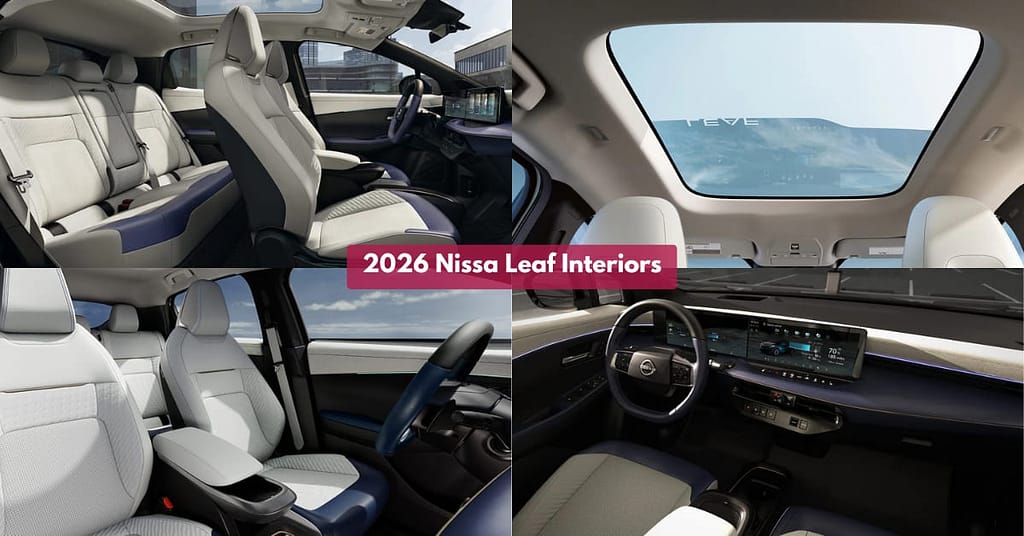
The interior moves away from the simple design of earlier Leafs and now matches what most buyers expect from a modern EV, with a cleaner layout and updated technology.
What’s Improved for 2026 –
- Dual screens: 12.3-inch displays on base trims, 14.3-inch displays on SV+ and higher
- Google Built-In with Google Maps and app support
- Wireless Apple CarPlay and Android Auto
Flat floor design that opens up space and storage - Heated front seats and heated steering wheel on higher trims
Top trims add Tailor Fit synthetic leather, made with recycled materials, along with woven fabric door panels and less shiny plastic than before.
Passenger and Cargo Space
Passenger space in the 2026 Nissan Leaf is clearly designed for everyday use rather than family road trips.
Passenger space:
- Front seats offer plenty of room and an open feel
- Rear seats are best for two adults or kids;
- legroom is tight for taller passengers on longer drives
- Flat floor improves foot room
- Higher trims add rear air vents, USB-C ports, and heated outboard rear seats
Cargo space:
- 20 cubic feet with the rear seats up
- ~55–56 cubic feet with the seats folded
The sportback shape reduces cargo space compared to older Leafs, but underfloor storage and an adjustable cargo floor help keep it practical for groceries, luggage, or daily gear.
Infotainment and Technology
Technology is a strong point for the 2026 Nissan Leaf, especially for the price.
Key features include:
- Google Built-In with Google Maps and EV route planning
- Wireless Apple CarPlay and Android Auto
360-degree surround-view camera (standard on all trims) - Wireless phone charging (SV+ and above)
- USB-C ports for front and rear passengers
- Available head-up display on Platinum Plus
- Vehicle-to-load (V2L) power outlets on Platinum Plus
Regenerative braking can be adjusted using steering-wheel paddles, with Nissan’s e-Step mode adding stronger regen (though it doesn’t bring the car to a full stop). Physical buttons for volume and key controls remain, which will appeal to buyers who don’t want everything buried in menus.
Safety & Driver-Assistance Features
The 2026 Nissan Leaf includes a solid set of safety and driver-assistance features, even on lower trims.
Standard and available features include:
- Nissan ProPILOT Assist for highway driving support
- Automatic emergency braking with forward collision warning
- Lane-keeping assistance
- Blind-spot monitoring
- Rear cross-traffic alert
- Parking sensors and a 360-degree surround-view camera
Including the surround-view camera across the lineup is a notable advantage in this price range.
Official safety ratings from NHTSA and IIHS were not available at the time of writing, and final specifications may vary by trim and market.
Pros
- Competitive starting price for a new EV
- Strong range for the price, especially on S+ and SV+ trims
- Major upgrade in interior design and technology
- Tesla Supercharger access via NACS for DC fast charging
- 360-degree surround-view camera standard on all trims
Cons
- Front-wheel drive only, no AWD option
- Rear-seat space is tight for taller adults
- Slower AC home charging than some rivals
- No ventilated seats or performance-focused variant
- Higher trims lose range and approach prices of larger EVs
Key Limitations & Trade-Offs
There is no all-wheel drive, rear-seat space is limited, and Level 2 home charging is slower than what some competitors offer. Higher trims add more features, but they also cost more and lose some driving range, which brings them closer in price to larger or more powerful EVs.
Drivers who take frequent long highway trips or rely heavily on public charging may find its charging speed and drivetrain options limiting.
Specifications (75 kWh Models)
| Category | Details |
| Starting Price | ~$26,000 |
| Battery | 75 kWh (Plus trims) |
| EPA Range | Up to 303 miles (trim dependent) |
| Real-World Highway Range | ~250 miles (75 mph, Car and Driver) |
| Drivetrain | Single-motor, front-wheel drive |
| Power | 214 hp / 261 lb-ft |
| DC Fast Charging | Up to 150 kW (NACS) |
| DC Charge Time | ~30–35 minutes (10–80%) |
| AC Charging | 7.2 kW |
| 0–60 mph | 6.9 seconds |
| Cargo Space | 20 cu ft (seats up) |
How It Compares in Its Segment
Compared with rivals like the Tesla Model 3, Hyundai Kona Electric, Chevrolet Bolt EV, and Volvo EX30, the Nissan Leaf stands out mainly on price and ease of ownership.
It generally costs less than most competitors while offering competitive range on S+ and SV+ trims, along with more standard safety and camera features, including a 360-degree view.
However, rivals like the Model 3 offer available all-wheel drive and better long-distance charging performance, while the EX30 delivers quicker acceleration and a more upscale interior.
Choose the Leaf if price, range per dollar, and standard features matter more than performance. Buyers who want AWD, stronger acceleration, or frequent road-trip capability will be better served by alternatives like the Model 3 or Kona Electric.
Who Is It For
- Buyers looking for an affordable EV
- First-time EV owners who want something simple to live with
- Daily commuters with reliable home or workplace charging
- Drivers who prioritize comfort, technology, and efficiency over speed
- Households adding a second car for everyday use
The 2026 Nissan Leaf works best for predictable daily driving, especially short commutes under 40–50 miles with regular access to charging. While the switch to NACS helps with public charging access, drivers who rely heavily on fast chargers will still need to plan more carefully than with some faster-charging rivals.
Who Should Skip It
- Buyers who want all-wheel drive, especially those living in snowy or mountainous regions, where traction and winter performance are a priority.
- Drivers who need more rear-seat or cargo space
- Shoppers focused on sporty performance or quick acceleration
- Those who prioritize fast Level-2 home charging
- Families planning frequent long-distance trips
- Buyers expecting the Leaf to function as a one-car household for frequent long-distance travel may find its charging speed and drivetrain options limiting over time.
Additional Notes
- The electrochromic panoramic glass roof uses adjustable tint instead of a physical shade and is exclusive to Platinum Plus
- CHAdeMO is fully discontinued on the Leaf
- Vehicle-to-load (V2L) is available but does not support whole-home backup
- There is no front trunk
Quick Spec Sheet
Verdict
The 2026 Nissan Leaf addresses its biggest gaps with up to 303 miles of range, NACS fast charging, and a more modern interior. It remains one of the most affordable long-range EVs, especially on S+ and SV+ trims, but does not offer all-wheel drive or performance-focused options.
It is best suited for daily commuting and value-focused buyers, not families, enthusiasts, or frequent long-distance drivers. While the updates improve usability, the Leaf still lacks the flexibility and drivetrain choices found in many newer EVs.
FAQs

I’m Brandon Coldwell, and I write about the latest car launches, EVs, and trends shaping the automotive world. I’ve always loved cars — the design, the tech, and the excitement of new releases — and now I enjoy turning updates into clear, helpful posts.