
Overview
The updated Toyota Corolla Cross continues to draw attention not because it breaks new ground, but because it represents one of the most rational choices in the subcompact SUV segment. Positioned as Toyota’s smallest and most affordable SUV, it is designed for buyers who prioritize low running costs, proven reliability, and straightforward daily usability over performance or image.
For 2026, Toyota has taken a refinement-focused approach. The Corolla Cross receives revised exterior styling and a modernized interior, headlined by updated infotainment technology. Rather than altering the vehicle’s core mechanicals or market positioning, these updates aim to address previous shortcomings while keeping the Corolla Cross competitive against rivals such as the Subaru Crosstrek and the Honda HR-V.
What’s New for 2026
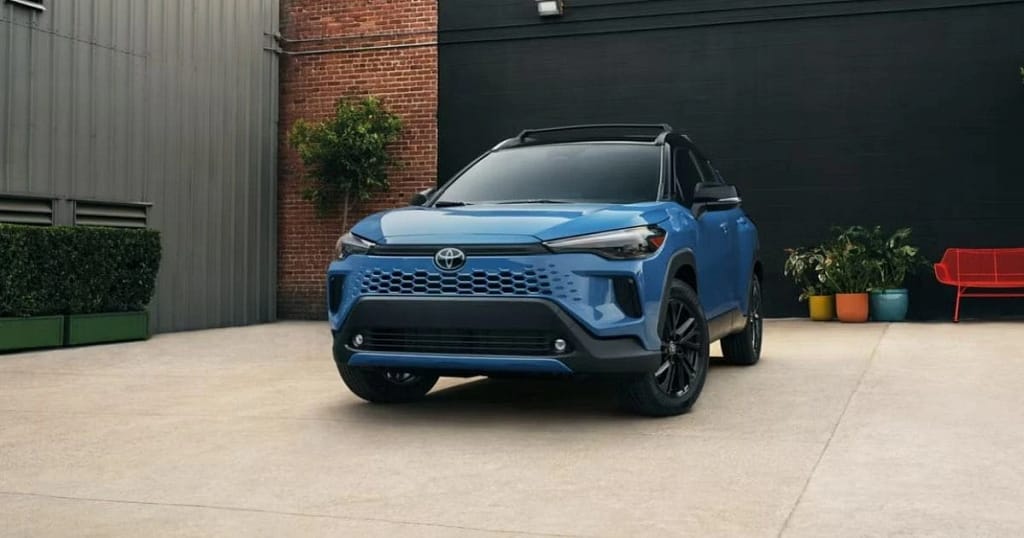
The 2026 Toyota Corolla Cross receives a measured update rather than a full redesign. Toyota’s focus is on visual refinements and interior technology improvements, while the vehicle’s underlying platform and powertrain options carry over unchanged.
Key updates include:
- Revised front-end styling with a new grille design
- Updated lighting signatures for a fresher exterior look
- Introduction of Cavalry Blue as a new exterior color
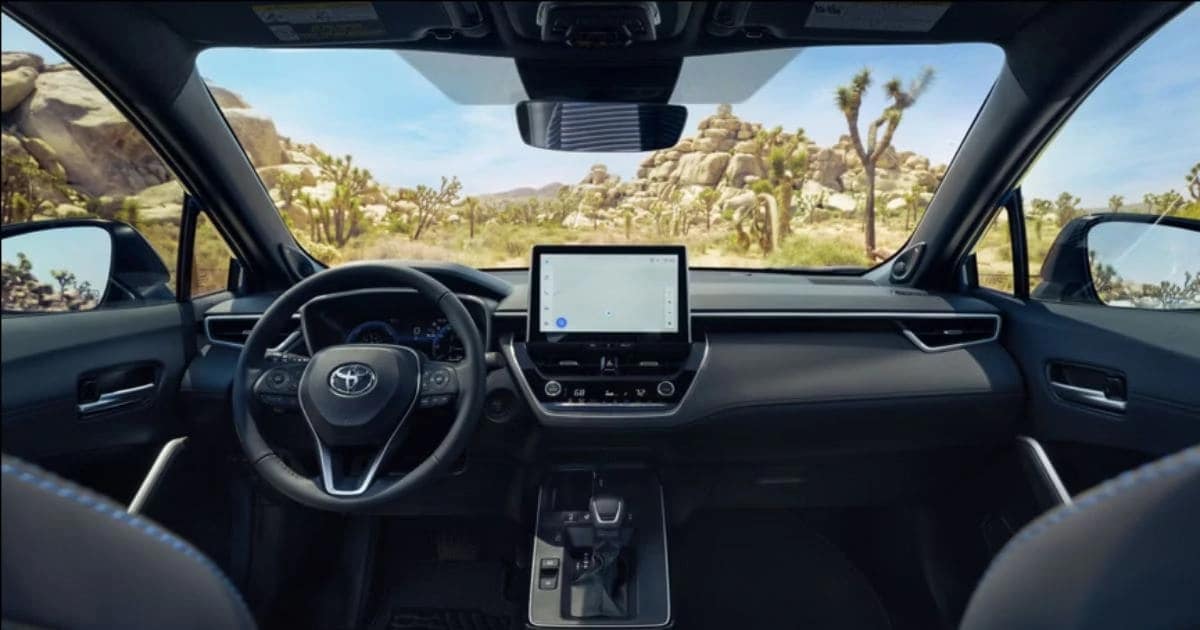
- Larger available 10.5-inch infotainment touchscreen with Toyota’s latest software
- Redesigned center console with improved storage and usability
- New 18-inch dark gray wheel design on XLE trims
- Heated front seats and heated steering wheel now standard on all-wheel-drive models
- Additional sound-deadening measures to reduce cabin noise
Overall, Toyota’s approach is evolutionary. The updates are intended to modernize the Corolla Cross and address prior criticisms—particularly around infotainment and refinement—while preserving the familiar, practical character that defines the model.
Pricing and Trims
The 2026 Toyota Corolla Cross remains competitively priced within the U.S. subcompact SUV segment. It sits above smaller entry-level crossovers while staying more affordable than compact SUVs such as the Toyota RAV4.
Gas Models — Confirmed Pricing
MSRP range: $26,385–$31,310
(Prices vary by trim and options)
Trim breakdown:
- L: $26,385
- LE: $28,715
- XLE (Recommended): $31,310
The XLE trim represents the most balanced option for many buyers. It adds features commonly expected in a modern SUV, including dual-zone automatic climate control, a power-adjustable driver’s seat, heated front seats, blind-spot monitoring, front and rear parking sensors, and 18-inch alloy wheels.
Hybrid Models — Pricing Context
While exact 2026 hybrid pricing may vary by configuration, recent model-year pricing provides a reliable reference point:
- Hybrid models typically start around $28,000
- Expect a premium of roughly $4,000 over comparable gas trims
- Well-equipped hybrid versions can reach the mid-$30,000 range
Any price increases for 2026 are expected to be incremental, reflecting added technology—such as the larger infotainment display—rather than changes to the underlying hybrid powertrain.
Engine, Transmission, and Drivetrain
The Toyota Corolla Cross is offered with both gasoline and hybrid powertrains, giving buyers a choice between efficiency and slightly more performance.
Gasoline Powertrain
The standard gas model uses a naturally aspirated four-cylinder engine carried over for 2026.
Key specifications:
- 2.0-liter four-cylinder
- 169 horsepower
- 150 lb-ft of torque
- Continuously variable transmission (CVT) with a physical first gear
- Front-wheel drive standard, all-wheel drive optional
Power delivery prioritizes efficiency and smoothness, making the gas Corolla Cross better suited for commuting than spirited driving.
Hybrid Powertrain
The hybrid version pairs a 1.8-liter gasoline engine with electric motors for improved efficiency and extra power.
Hybrid specifications:
- 1.8-liter four-cylinder with electric motors
- Up to 196 total system horsepower
- Electronic all-wheel drive available
- Estimated fuel economy up to ~42 mpg combined
- Maximum towing capacity: 1,500 pounds
The hybrid system is derived from Toyota’s proven architecture, offering strong fuel efficiency and slightly quicker acceleration than the standard gasoline model, while maintaining smooth and predictable performance.
Fuel Economy
As per EPA ratings, front-wheel-drive (FWD)Corolla Cross models are rated at up to 32 mpg combined, while all-wheel-drive (AWD) versions are rated at approximately 30 mpg combined.
Fuel economy tends to be higher in city and mixed driving conditions, with highway efficiency showing smaller gains at sustained speeds.
Interior and Comfort
The Corolla Cross cabin emphasizes practicality and durability, closely mirroring the layout and materials found in the Corolla sedan and hatchback.
Key Highlights:
- Simple, familiar dashboard design with soft-touch surfaces in key areas
- Durable materials built for longevity, particularly on frequently touched surfaces
- Higher trims feature faux-leather upholstery with contrast stitching
- Heated front seats and a leather-wrapped shift knob available on XLE trims
- Clear, easy-to-use physical climate controls and thoughtfully designed center console
- Practical storage options throughout the cabin
Passenger space is adequate for daily use, though it’s not class-leading. Toyota’s focus is on a functional, comfortable environment that balances quality with long-term wear, rather than luxury or flashy design elements.
Infotainment and Technology
The 2026 Corolla Cross brings meaningful tech upgrades, particularly in higher trims, focusing on functionality and ease of use rather than flashy features.
Key Highlights:
- 10.5-inch infotainment touchscreen on XLE and XSE trims, with Toyota’s latest software
- Wireless Apple CarPlay and Android Auto for seamless smartphone integration
- Fully digital 12.3-inch instrument cluster on top trims, offering customizable displays
- Dual-zone automatic climate control available on higher trims
- Reduced use of gloss piano-black surfaces for a cleaner, less fingerprint-prone cabin
- Larger wireless charging pad and rear USB-C ports
Standard Technology on Lower Trims:
- 8.0-inch touchscreen with six-speaker audio
- Apple CarPlay, Android Auto, and SiriusXM satellite radio
Available Upgrades:
- JBL premium audio system with subwoofer
- Larger digital instrument cluster on XLE/XSE trims
The system is functional and user-friendly, though many drivers may still prefer using their smartphone for navigation and media over the built-in interface.
Passenger and Cargo Space
The Corolla Cross makes smart use of its compact footprint, balancing passenger comfort and cargo practicality.
Passenger Space:
- Rear legroom around 32 inches, suitable for adults on shorter trips
- Good headroom for taller occupants
- Rear air vents and USB-C ports enhance comfort and connectivity
- Upright seating improves visibility and overall cabin feel
Cargo Capacity:
- Approximately 22–24 cubic feet behind the rear seats
- Fold-flat rear seats expand storage versatility
- Wide opening and low load floor make loading easier
- Power liftgate available on XLE and XSE trims
- No spare tire; includes a fix-a-flat kit
The Corolla Cross offers a practical interior for everyday needs, though rear-seat and cargo space fall slightly short of some newer competitors.
Safety and Driver-Assistance Features
The Corolla Cross includes Toyota Safety Sense as standard equipment, which bundles several active driver-assistance features. These include adaptive cruise control, lane-departure alert with steering assist, automatic emergency braking with pedestrian detection, and automatic high-beam headlights. Blind-spot monitoring and rear cross-traffic alert are available on higher trims.
Crash-test results for the Corolla Cross are published by the National Highway Traffic Safety Administration (NHTSA) and the Insurance Institute for Highway Safety (IIHS), where buyers can review safety performance data.
Specifications
| Category | Specification |
|---|---|
| Body Style | Subcompact SUV |
| Seating Capacity | 5 |
| Engine (Gas) | 2.0-liter naturally aspirated 4-cyl |
| Horsepower (Gas) | 169 hp |
| Torque (Gas) | 150 lb-ft |
| Transmission | Continuously Variable Transmission (CVT) |
| Drivetrain | Front-Wheel Drive (standard), All-Wheel Drive (optional) |
| Hybrid Powertrain | 1.8-liter 4-cyl + electric motors |
| Hybrid System Output | Up to ~196 hp |
| Fuel Economy (FWD) | Up to ~32 mpg combined (EPA) |
| Fuel Economy (AWD) | ~30 mpg combined (EPA) |
| Cargo Space | ~22–24 cu ft (rear seats up) |
| Infotainment Display | 8.0″ standard / 10.5″ available |
| Instrument Cluster | Standard digital / available larger digital display |
| Safety Suite | Toyota Safety Sense (standard) |
| Towing Capacity (Hybrid) | Up to 1,500 lbs |
| Warranty (Basic) | 3 yrs / 36,000 mi |
| Warranty (Powertrain) | 5 yrs / 60,000 mi |
2026 Toyota Corolla Cross Pros and Cons
Pros
- Affordable entry point into SUV ownership
- Strong fuel efficiency, especially with hybrid models
- Practical interior and cargo space
- Comprehensive standard safety features
- Available all-wheel drive
- Improved cabin noise insulation
Cons
- Modest acceleration and performance in gas models
- Interior materials feel basic in some trims
- Infotainment system lags behind newer competitors
- Tight rear-seat legroom
- No off-road-oriented variant
- Limited personality and driving engagement
Competitors
The 2026 Toyota Corolla Cross competes in the subcompact SUV segment against models like the Honda HR‑V, Subaru Crosstrek, Hyundai Kona, Kia Seltos, and Nissan Rogue Sport. Compared with these rivals, the Corolla Cross stands out for its hybrid fuel efficiency, reliability, and practical interior space, while its standard gasoline models prioritize comfort over performance.
While the Crosstrek offers standard all-wheel drive and higher ground clearance for mild off-road use, the HR‑V emphasizes rear-seat room and cargo flexibility. The Kona and Seltos appeal with more tech features and optional turbo engines, and the Rogue Sport provides balanced daily drivability with user-friendly safety and infotainment. Buyers can weigh efficiency, space, and available technology when choosing between these options.
Who It’s For
The 2026 Toyota Corolla Cross is ideal for:
- Buyers seeking a small, efficient daily driver
- Shoppers prioritizing fuel economy and long-term reliability
- Urban and suburban families wanting SUV styling in a compact footprint
- Drivers focused on low-stress ownership and practicality
It’s not aimed at those looking for sporty performance or off-road capability, but it excels as a dependable, practical, and efficient crossover for everyday use.

I’m Brandon Coldwell, and I write about the latest car launches, EVs, and trends shaping the automotive world. I’ve always loved cars — the design, the tech, and the excitement of new releases — and now I enjoy turning updates into clear, helpful posts.